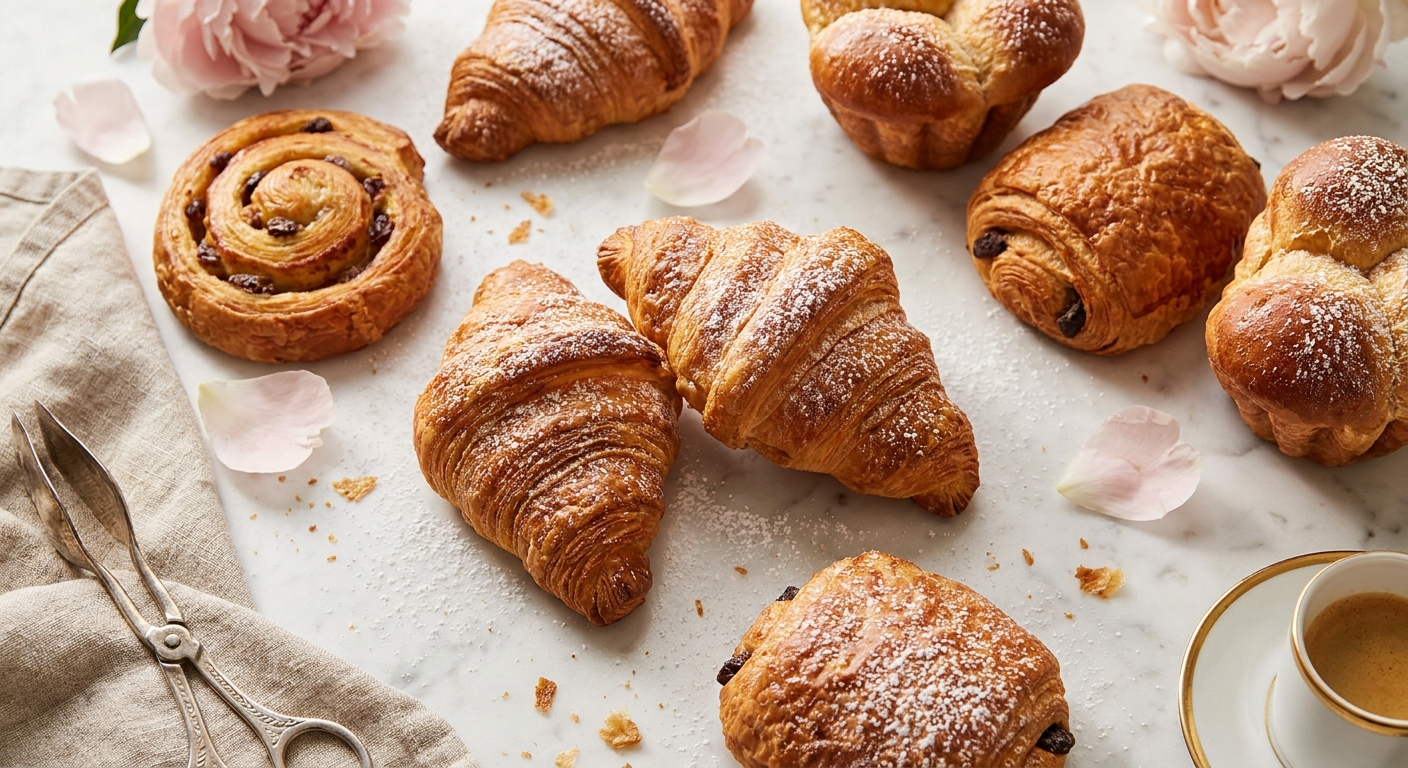
The Art of the Croissant:
72 Hours, One Perfect Bite
There is a moment — and if you've had a real croissant, you know it — when the shell shatters. A faint, papery crackle, a small snow of flakes onto the plate, and then the inside: warm, honeycombed, almost translucent, tasting of nothing but very good butter and time. That moment is not an accident. It is the result of three days of patient work, and at One Day in Paris in Alpharetta, we wouldn't dream of rushing it.
Most croissants in America are made in a few hours. Ours take three days. Here's why that matters — and how to taste the difference the next time you bite into one.
It starts with the dough resting, not rising
A croissant begins as a simple détrempe — flour, water, a little milk, sugar, salt, and yeast. But before anything happens, the dough goes cold and still. We let it rest overnight, low and slow, so the flour fully hydrates and the flavor begins to develop. Bread, like wine, is better when it's given time to become itself.
The butter is the whole point
The next day, we lock a single sheet of European-style cultured butter — far higher in fat than the supermarket kind — inside the dough. Then comes the part that separates a pastry from a masterpiece: lamination.
A proper croissant has 27 distinct layers of butter and dough. You can count them, if you're patient, in the cross-section of a good one.
We fold and roll, chill and fold again, three times. Each fold triples the layers. Keep the butter too warm and it melts into the dough — you get bread, not pastry. Too cold and it cracks. The whole dance happens in a narrow window of temperature, by feel, by hand.
How to taste a real croissant
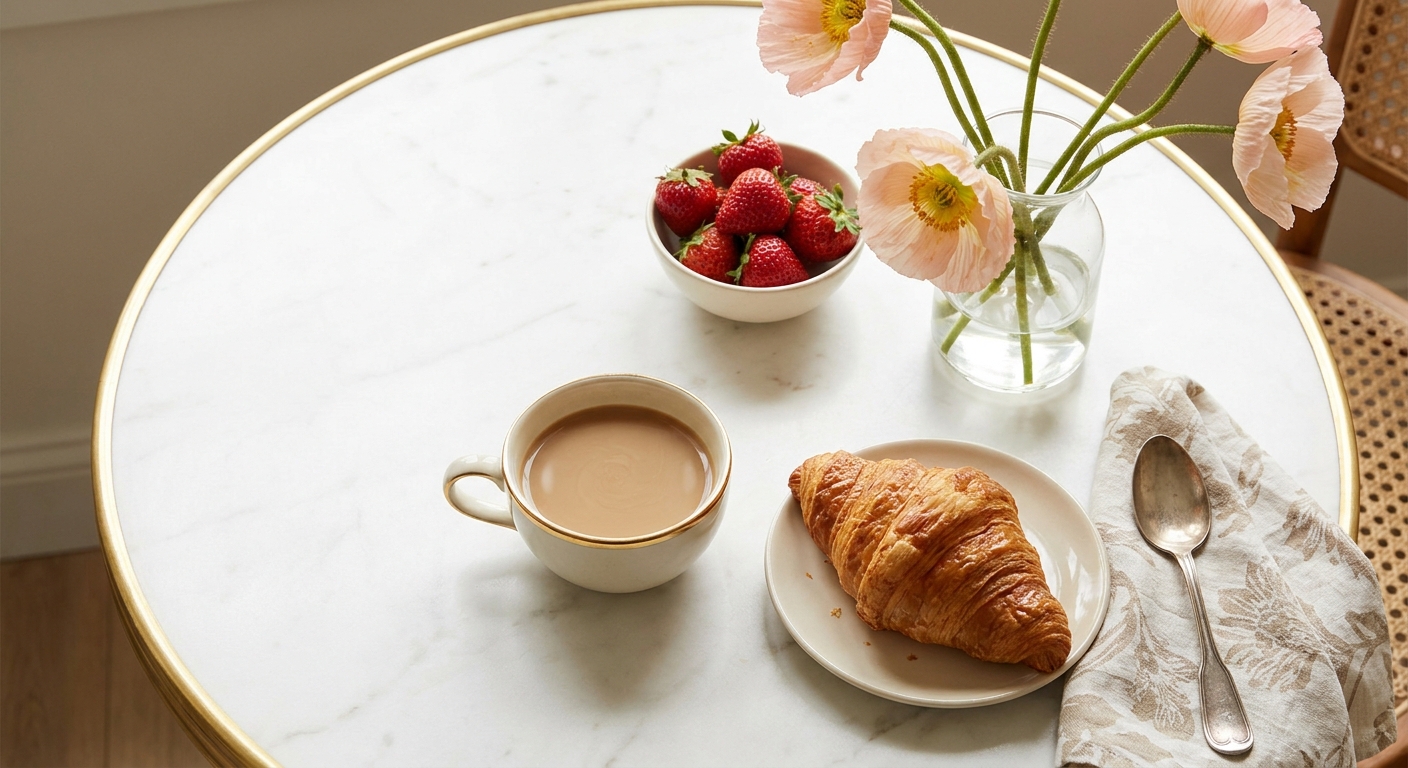
Next time one is in front of you, slow down and look for these four things:
- The sound. A real croissant is loud. The shell should shatter, not bend.
- The crumb. Tear it open. You want an open, honeycombed interior — proof of all those layers — not a dense, bready inside.
- The sheen. A glossy, deep-amber exterior means a proper egg wash and a hot, even bake.
- The finish. It should taste of butter and gently of the wheat itself — never greasy, never bland.
Why we bake at dawn
On the third morning, while Alpharetta is still quiet, the shaped croissants get their final proof and go into the oven. We bake in small batches throughout the morning for one stubborn reason: a croissant is at its absolute best within an hour or two of leaving the oven. After that, it's still good — but it's no longer that moment.
That's the whole philosophy behind One Day in Paris, really. We're not trying to theme a French café. We're trying to give Alpharetta the real thing — the croissant, the coffee, the unhurried morning — exactly the way it's done a few thousand miles east of here.
Come taste the difference.
Fresh croissants are out of the oven every morning at La Boulangerie. Stop in, or order ahead for pickup.
Reserve a TableOne Day in Paris is an authentic French bistro, boulangerie and wine bar in the heart of Alpharetta, Georgia — serving house-roasted coffee and fresh pastries by morning, refined French bistronomie and natural wine by night.